Mara Günther · 12 September 2026
Strategies for Refining Product Categorization Systems Within Specialized Digital Marketplaces
Specialized digital marketplaces handle niche product ranges that demand precise categorization to support accurate search results and efficient inventory management. Observers note that poor taxonomy structures lead to mismatched listings while refined systems improve visibility for sellers and buyers alike. Research from the European Commission indicates that structured categorization frameworks help reduce return rates in cross-border e-commerce platforms by aligning product attributes with consumer expectations across multiple regions.
Core Challenges in Niche Categorization
Marketplaces focused on items such as vintage tools or specialized medical equipment face inconsistent attribute definitions that vary by supplier and region. Data from the OECD digital economy reports shows these inconsistencies compound when platforms expand internationally and encounter differing regulatory labeling requirements. Experts have observed that manual tagging processes often introduce errors at scale whereas automated validation checks catch discrepancies before listings go live. One study from researchers at the University of Melbourne revealed that specialized categories require deeper sub-levels than general retail taxonomies because buyers search using highly specific technical terms.
Building Hierarchical Taxonomies
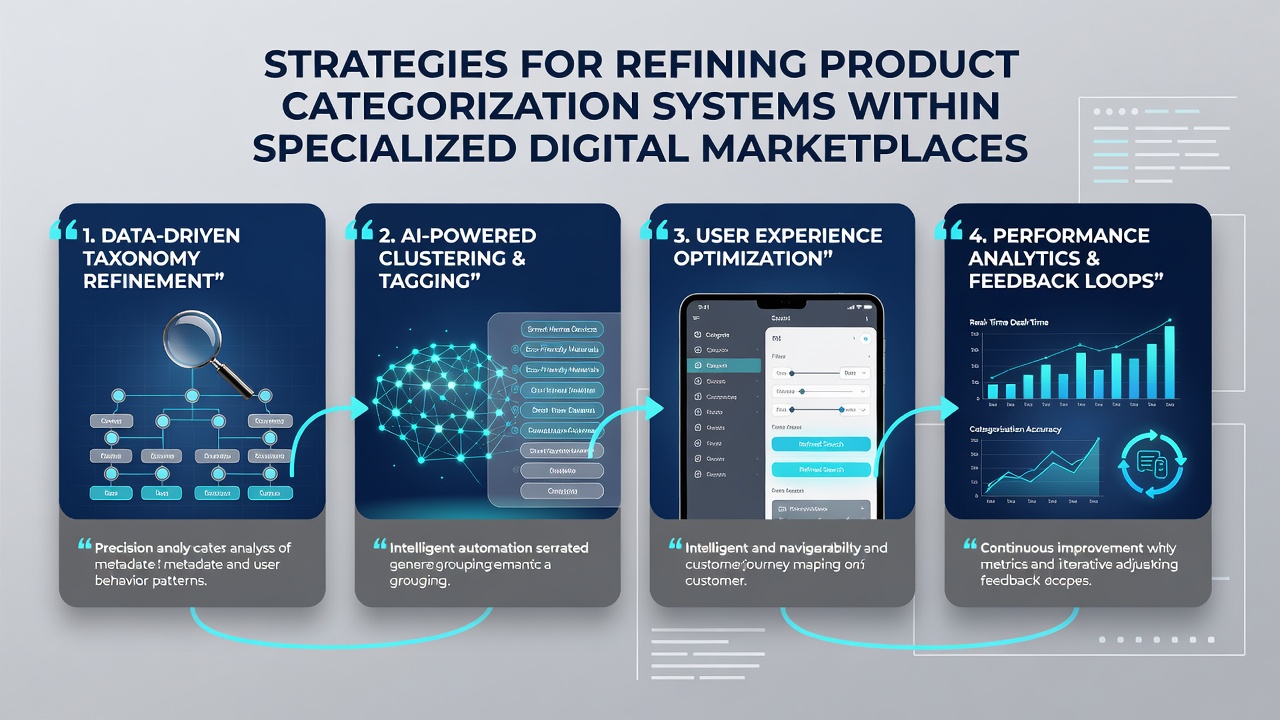
Effective refinement begins with mapping core product families then layering attributes such as material composition, certification standards, and compatibility details. Those who manage large catalogs report success when they establish parent-child relationships that allow dynamic filtering without creating duplicate entries. The Australian Competition and Consumer Commission guidelines on digital platform practices emphasize clear hierarchical navigation to support fair trading and reduce consumer confusion in online environments. Platforms that audit existing taxonomies against real transaction data frequently identify redundant branches that can be consolidated to streamline the user experience.
Implementation teams often integrate standardized identifiers such as GTIN codes alongside custom attributes tailored to niche verticals. This dual approach maintains compatibility with broader e-commerce ecosystems while preserving the granularity required for specialized searches. Evidence suggests that phased rollout of new taxonomies, starting with high-volume categories, minimizes disruption for active sellers during transition periods.
Integrating Technology and Feedback Mechanisms
Machine learning models trained on historical search queries and purchase patterns help surface missing category assignments and suggest merges for overlapping terms. Observers note that these models perform best when they incorporate regional language variations and seasonal demand shifts that appear in September 2026 marketplace data releases. Continuous feedback loops from buyer searches and seller submissions allow systems to evolve without requiring complete overhauls every quarter. Research indicates that combining algorithmic suggestions with human review from category specialists reduces false positives that could otherwise bury relevant products in search results.
Platforms also track performance metrics such as click-through rates per category and bounce rates on filtered results. These indicators reveal where refinements are needed most urgently and guide prioritization of taxonomy updates. Teams that document decision rationales for each structural change create institutional knowledge that supports consistent application across future expansions.
Monitoring Performance and Iterative Adjustments
Regular audits compare categorization accuracy against benchmark datasets from industry sources and internal sales records. Analysts track how changes affect conversion metrics and adjust weighting of attributes accordingly. Those managing these systems find that quarterly reviews aligned with major platform updates prevent drift in category definitions over time. External validation through third-party audits further strengthens compliance with evolving digital marketplace standards in multiple jurisdictions.
Conclusion
Refined categorization systems in specialized digital marketplaces rely on hierarchical design, technological integration, and ongoing measurement to maintain relevance as product ranges and buyer behaviors shift. Data from international regulatory bodies and academic studies demonstrates measurable improvements in search accuracy and transaction efficiency when these strategies receive consistent application. Platforms that embed these practices position their infrastructure to handle growth without sacrificing the precision that defines niche market success.